Boiler Leaking or No Hot Water? What to Do Before It Gets Worse
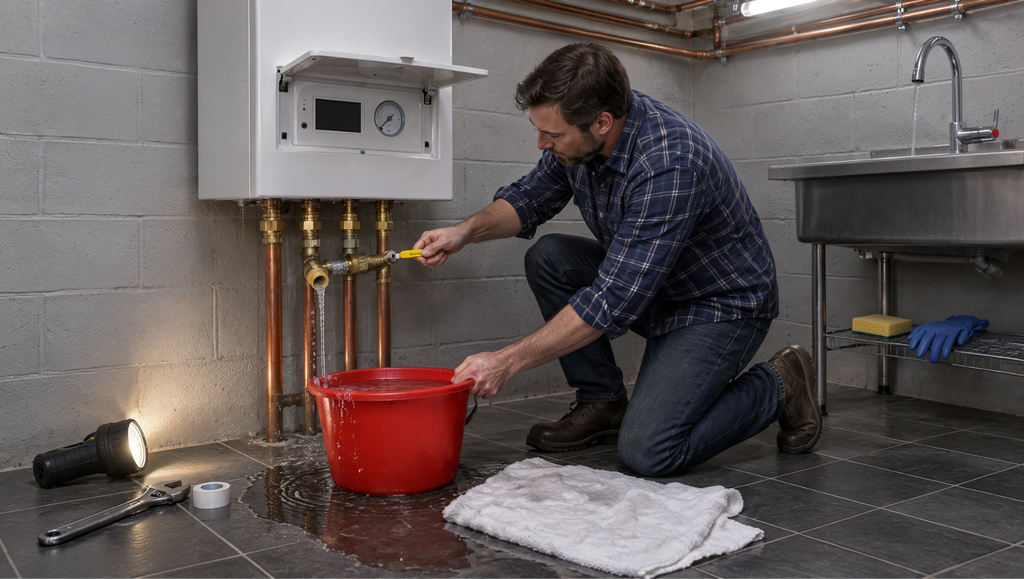
The first sign is usually small. A damp spot on the basement floor. A little rust-colored stain under the unit. A faint hiss you only notice when the house is quiet. Then one morning the shower runs cold and the radiators feel lukewarm. A boiler leaking even a little water is a problem that rarely fixes itself, and it tends to get worse right when you need heat the most.
Plenty of older homes in Westchester and on Long Island still run on hot water or steam boilers. They’re durable systems, often lasting decades. But durable isn’t the same as invincible.
This guide covers what to do the moment you spot a leak, the most common causes, and how to know whether you’re looking at a quick repair or a replacement conversation.
First Steps When You Find Your Boiler Leaking
Don’t panic, and don’t ignore it. Do these things in order.
- Check for safety risks. If water is near electrical components, wiring, or outlets, keep your distance. If you smell gas, leave the house and call your utility from outside.
- Turn the boiler off. Use the switch on the unit or the emergency shutoff (often a red switch at the top of the basement stairs).
- Shut the water supply. Close the cold water feed valve to the boiler if you can reach it safely.
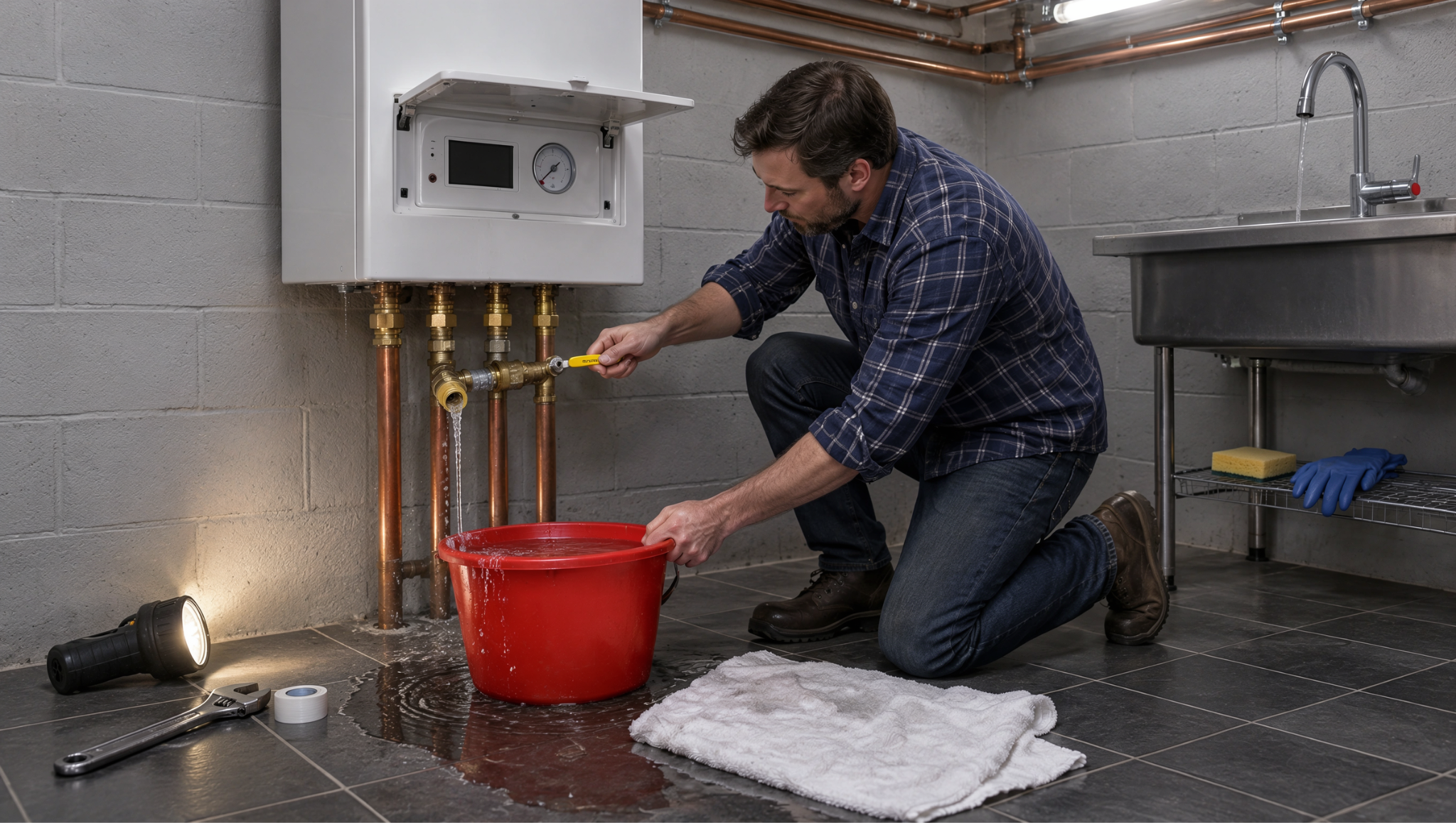
- Contain the water. Put down towels or a shallow pan and move anything valuable away from the area.
- Take photos. Note where the water is coming from and the reading on the pressure gauge. This helps your technician and may help with insurance.
Then call a licensed technician, because a boiler leaking under pressure isn’t a weekend project. Boilers combine high pressure, high temperatures, and in most homes, gas. Taking one apart yourself isn’t worth the risk.
Why Is My Boiler Leaking?
Where the water appears tells you a lot. Here are the usual suspects.
The pressure relief valve
This valve opens to release water when pressure inside the system gets too high. It’s doing its job, but it’s also telling you something upstream is wrong, often a failed expansion tank or a fill valve letting in too much water. If you see water coming from a pipe on the side of the unit, start here.
A waterlogged expansion tank
The expansion tank gives heated water room to expand. When it fails, pressure spikes every time the boiler fires, which pushes water out through the relief valve. A boiler leaking from the relief valve and an expansion tank that feels heavy or full when you tap it are a classic combination.
Loose fittings and worn seals
Joints expand and contract every heating cycle. Over the years, fittings loosen and gaskets dry out. A boiler leaking from a fitting is usually a slow drip, and it’s among the easier repairs.
Pump seals
The circulator pump moves hot water through your radiators or baseboards. When its seal wears out, you’ll find the boiler leaking from the pump housing. Catch it early and it’s a seal or pump replacement. Let it go and you risk water damage to the motor.
Corrosion or a cracked heat exchanger
This is the serious one. A boiler leaking from the body of the unit itself, especially with rust stains, can mean corrosion has eaten through the heat exchanger or a section has cracked. On an older boiler, that often tips the decision toward replacement.
No Hot Water but No Obvious Leak?
Many homes use the boiler to heat domestic water as well, either through an indirect tank or a tankless coil. So when the hot water quits, the boiler is a natural suspect even without a puddle.
Check the pressure gauge first. Most residential hot water boilers run somewhere around 12 to 15 psi when cold. Low pressure can mean water is escaping somewhere you can’t see, like a hidden pipe behind a wall or under a floor. That’s a hidden boiler leaking situation, and it can cause damage long before anyone notices.
Other common causes include a failed thermostat or aquastat, a broken circulator pump, a pilot or ignition problem, or a tankless coil clogged with mineral scale. A technician can usually narrow it down within one visit.
Small Leaks Cause Big Problems
Here’s why I’d never wait on this. A slow boiler leaking a cup of water a day doesn’t seem like much. Over a heating season, though, that’s gallons soaking into concrete, drywall, and stored boxes.
Moisture in a basement is an open invitation for mold. The EPA’s guidance on mold and moisture is blunt about it: the key to mold control is moisture control, and water problems should be fixed and dried within 24 to 48 hours to keep mold from taking hold. If your basement already feels damp, pairing the boiler repair with better indoor humidity control is a smart move.
Then there’s the boiler itself. A boiler leaking day after day means fresh water keeps flowing in, bringing oxygen and minerals that speed up corrosion inside. A small leak can shorten the life of the whole system.
Repair or Replace Your Boiler?
Many boilers last 15 to 30 years depending on type and maintenance. If yours is relatively young and the problem is a valve, fitting, pump, or expansion tank, repair is almost always the right call.
If it’s past 20 years, the heat exchanger is failing, or you’re on your third repair in two winters, it’s time to run the numbers. Newer high-efficiency boilers can use noticeably less fuel. The U.S. Department of Energy’s guide to furnaces and boilers explains AFUE ratings and what kind of savings to expect from an upgrade. This honest guide to repair or replace decisions also lays out the 50 percent rule many technicians use.
And ask about rebates. New York’s Clean Heat program offers incentives for some high-efficiency and heat pump upgrades, which can take a real bite out of the cost.
Get Your Boiler Leak Fixed Fast
If you’ve found your boiler leaking or the hot water has quit, Americare can help. Their licensed, in-house technicians repair and replace boilers across Westchester, Long Island, and the five boroughs, and they’ve served more than 13,000 customers since 2010. You’ll get 24/7 emergency service, an honest diagnosis, upfront pricing, and financing if a replacement turns out to be the better option.
You can contact the Americare team here to schedule a repair or talk through what you’re seeing.
Final Thoughts
A boiler leaking water is your heating system asking for help. Sometimes it’s a cheap valve. Sometimes it’s the beginning of the end. Either way, you’ll pay less and stay warmer if you act now instead of mopping the basement floor every morning until January. Shut it down, contain the water, and get someone qualified to take a look. Then enjoy a hot shower again.