

Indoor Humidity Control for Homes in NYC & Westchester County
How Proper Indoor Humidity Control Protects Your Comfort, Indoor Air Quality, and Home
When most homeowners think about air conditioning, they think about staying cool. But your air conditioner has another equally important job: controlling indoor humidity.
During New York’s hot, mid-summer months, excess moisture can make you feel uncomfortable, even when the thermostat reads the right temperature. High indoor humidity also contributes to musty odors, condensation, poor indoor air quality, and mold growth, especially in older homes, brownstones, apartment buildings, and homes with finished basements.
At Americare Appliance & HVAC/R Solutions, we help homeowners throughout New York City’s five boroughs and Westchester County improve indoor comfort by ensuring their HVAC systems effectively manage both temperature and humidity.
How Indoor Humidity Control Works
Your air conditioner doesn’t simply cool the air; it acts as a dehumidifier.
As warm, humid air passes over the indoor evaporator coil, moisture condenses into water. This water is collected and safely drained away through the system’s condensate line. When your air conditioning system is properly sized, well-maintained, and operating efficiently, it naturally keeps indoor humidity at comfortable levels while cooling your home.
However, if the system isn’t functioning properly, that excess moisture remains indoors, leaving your home feeling damp even after the temperature drops.
Why Indoor Humidity Control Matters in New York Homes
While New York doesn’t experience year-round tropical weather, our summer peaks bring intense humidity. Furthermore, homes throughout NYC and Westchester face unique structural moisture challenges:
The Cost of High Humidity: When indoor moisture stays too high, it doesn’t just cause discomfort. It can lead to musty odors, mold and mildew growth, warped wood flooring, and increased strain on your AC system.
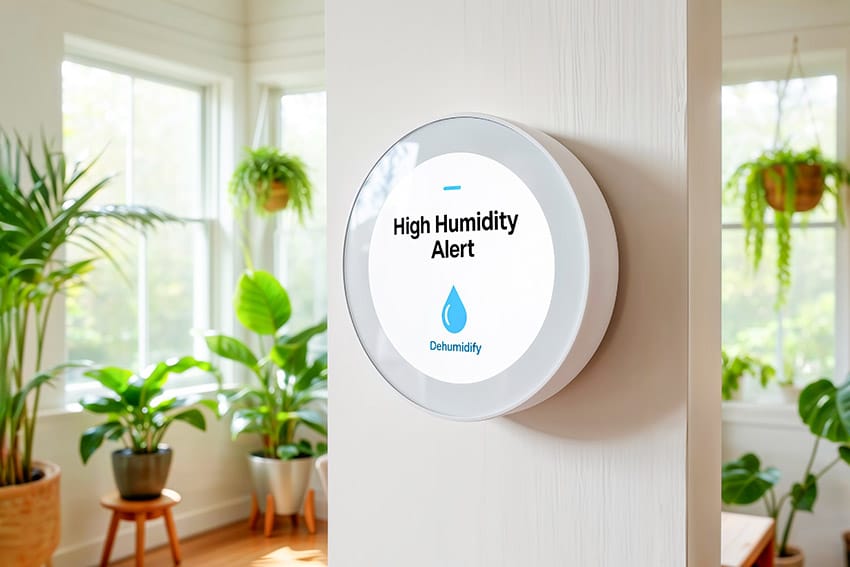
Why Your House Feels Humid with the AC Running
One of the most common questions our technicians hear is: “Why does my house still feel humid when the air conditioner is running?” Several common HVAC issues can prevent your system from removing moisture effectively:
HVAC Issue: An Oversized Air Conditioner
Bigger isn’t always better. An oversized unit cools the house too quickly and shuts off before completing a full cycle. Because dehumidification takes time, the system leaves the air feeling cold but damp.
Dirty Air Filters
Restricted airflow limits your system’s ability to pull air across the coils, severely reducing moisture removal efficiency.
Clogged Condensate Drains
If the drain line clogs, water backs up into the system instead of exiting the home. This causes humidity levels to spike, increasing the risk of major water damage.
Low Refrigerant Levels
Low refrigerant levels or dirty coils reduce the system’s cooling capacity, preventing it from reaching the temperatures needed to condense moisture from the air.
Pro Tip: Check Your Condensate Drain System
Homeowners can perform a quick visual inspection between professional maintenance visits. While your AC is running, look for these key signs:
- Confirm water is draining steadily from the outdoor condensate line.
- Check for standing water or overflow around the indoor unit or drain pan.
- Ensure your safety float switch (if equipped) is clear of debris.
If you notice standing water or a clogged line, turn off the system and schedule service immediately to prevent water damage.
The Sweet Spot: Keep Humidity Between 45% and 55%
According to the U.S. Environmental Protection Agency (EPA), homeowners should aim to maintain an indoor relative humidity level between 30% and 50% for optimal comfort and health
When levels consistently cross the 60% threshold, your home becomes a breeding ground for dust mites, mold, and musty odors, while simultaneously driving up your cooling costs. A simple, inexpensive digital hygrometer from a local hardware store can help you track these levels.
Quick Tips for Better Indoor Humidity Control:
Professional Indoor Humidity Control Solutions
If your home constantly feels damp, your HVAC system likely needs more than a basic DIY fix. At Americare Appliance & HVAC/R Solutions, our comprehensive approach includes:
We proudly serve homeowners across Manhattan, Brooklyn, Queens, the Bronx, Staten Island, and Westchester County. Whether your system needs a routine tune-up, a critical repair, or an indoor air quality upgrade, our experienced technicians are ready to restore your home’s comfort.
Ready to get rid of the indoor stickiness? Contact Americare today to schedule your professional HVAC inspection.
