Furnace Blowing Cold Air? 7 Common Causes and When to Call a Pro
It usually happens on the first truly cold night. You turn up the thermostat, hear the furnace kick on, hold your hand over the vent, and feel air that’s barely room temperature. A furnace blowing cold air is one of the most common heating complaints every November, and the good news is that it isn’t always a big repair.
Sometimes it’s a setting. Sometimes it’s a filter nobody has touched since last March. And sometimes it’s a worn part that needs a licensed tech.
Below are the seven causes that show up most often in Westchester and Long Island homes, what you can safely check yourself, and the point where you should stop poking around and pick up the phone.
Is Your Furnace Blowing Cold Air or Just Warming Up?
Here’s something a lot of homeowners don’t know. A furnace blowing cold air for the first minute or two after it starts can be completely normal. The blower often pushes out air that’s been sitting in chilly ductwork before the warm air arrives. Give it a few minutes.
If the air is still cool after five minutes, or the system cycles on and off without ever warming the house, then you’ve got something worth tracking down.
The 7 Most Common Reasons for a Furnace Blowing Cold Air
1. The thermostat fan is set to “On” instead of “Auto”
This is the number one culprit, and it takes ten seconds to fix. When the fan is set to “On,” the blower runs nonstop, even between heating cycles. So you get a furnace blowing cold air every time the burners aren’t firing. Switch it to “Auto” and the fan will only run while the system is actually heating. While you’re there, confirm the thermostat is set to “Heat” (someone may have bumped it) and that the batteries aren’t dead.
2. A clogged air filter
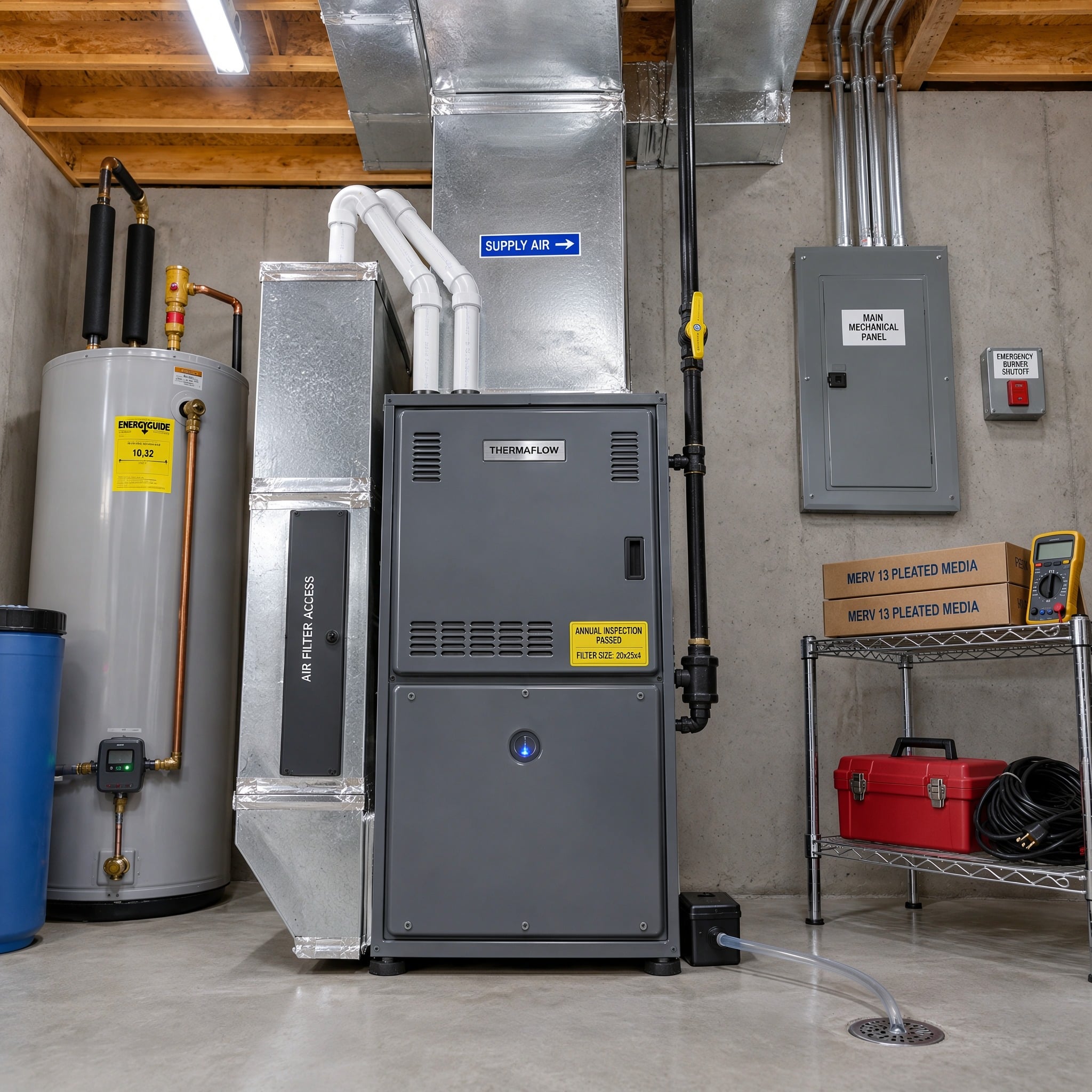
A dirty filter chokes airflow. When that happens, the heat exchanger can overheat, and a safety device called the high limit switch shuts the burners off to protect the system. The blower keeps going, though, and that’s how a neglected filter turns into a furnace blowing cold air. Pull the filter and hold it up to a light. If you can’t see through it, replace it. Most homes need a fresh one every one to three months during the heating season, and more often with pets.
3. The pilot light is out or the igniter has failed
Older furnaces use a standing pilot light. Newer ones use an electronic igniter. Either way, no flame means no heat. If you have an older unit and feel comfortable, the relighting steps are usually printed on a label inside the furnace door. If the pilot won’t stay lit, or an electronic igniter clicks without lighting, that’s a job for a technician. A thermocouple or igniter replacement is usually a fairly quick repair.
4. A dirty flame sensor
This one surprises people. The flame sensor is a thin metal rod that confirms the burners have lit. When it gets coated with carbon, it can’t detect the flame, so the furnace shuts off the gas a few seconds after ignition as a precaution. You’ll hear it start, maybe see a brief flame, and then nothing. The fan keeps running, leaving you with a furnace blowing cold air on a frustrating loop. A technician can clean or replace the sensor in a short visit.
5. Gas supply problems
If your stove or water heater isn’t working either, the problem may be upstream of the furnace. Check that the gas valve to the unit is open (the handle should run parallel to the pipe). An interrupted supply can easily leave you with a furnace blowing cold air. And if you smell gas at any point, don’t touch light switches. Leave the house and call your utility from outside.
6. Leaky or disconnected ductwork
Sometimes the furnace produces heat just fine, but it escapes before reaching your rooms. A duct that’s come loose in an attic, crawl space, or unheated basement dumps warm air where it does no good. If some rooms are toasty and others feel like a furnace blowing cold air, the ducts are a likely suspect.
7. A clogged condensate line (high-efficiency furnaces)
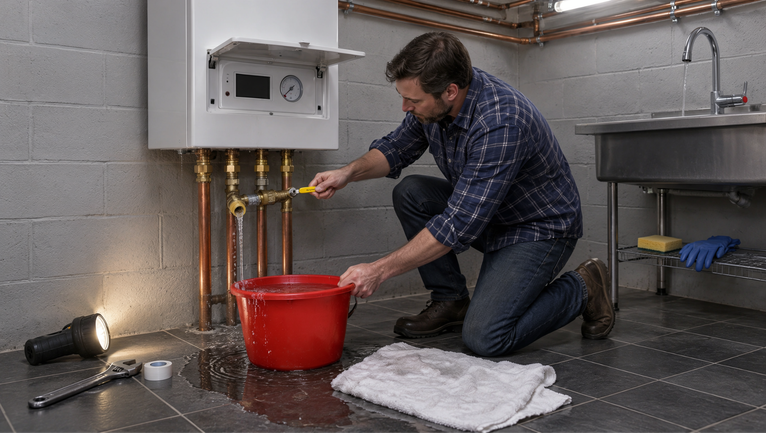
High-efficiency furnaces produce water as a byproduct, and it drains through a small plastic line. When that line clogs or freezes, a float switch shuts the burners down to prevent water damage. A furnace blowing cold air with a puddle forming nearby points straight at this. Clearing the line can be simple, but if it keeps happening, have someone check how it’s routed.
Don’t Ignore What Your Furnace Is Telling You
A furnace blowing cold air is annoying. It can also be a warning. Safety switches exist for a reason, and a system that keeps tripping its high limit switch may have a cracked heat exchanger, which can let combustion gases into your living space.
That’s why every home with a gas furnace needs working carbon monoxide detectors on each level. The Consumer Product Safety Commission’s carbon monoxide resources explain the symptoms of CO poisoning (headache, dizziness, nausea) and why detectors near sleeping areas matter. If your detector goes off, get everyone outside first and worry about the furnace later.
Pay attention to the air itself, too. Running a furnace all winter dries out indoor air, and dry air feels colder at the same thermostat setting. If the house feels chilly even when the system is working, look into indoor humidity control before you blame the furnace.
When to Stop Troubleshooting and Call a Pro
Honestly, most homeowners should stop after the thermostat, the filter, and the breaker. Those checks are safe. Anything involving gas, burners, igniters, or the inside of the cabinet belongs with a licensed technician.
Call for service if:
- You’ve replaced the filter, fixed the thermostat settings, and still have a furnace blowing cold air
- The burners light and then shut off within seconds
- You hear banging, screeching, or rattling from the unit
- Your carbon monoxide detector goes off, or you smell gas
- The system short cycles, turning on and off every few minutes
Age matters too. Furnaces typically last somewhere around 15 to 20 years. If yours is in that range and the repair quotes keep climbing, it’s fair to ask whether replacement makes more sense. This honest guide to repair or replace decisions walks through the same math, and it applies to heating equipment as much as kitchen appliances.
If you do replace, efficiency deserves a close look. The U.S. Department of Energy’s guide to furnaces and boilers explains AFUE ratings and how much fuel an older system may waste compared with a modern high-efficiency unit.
Get Your Heat Back Today
If you’re stuck with a furnace blowing cold air and the easy fixes haven’t worked, Americare can help. Their licensed, in-house technicians have been repairing heating systems across Westchester, Long Island, and the five boroughs since 2010, with more than 13,000 customers served. They offer 24/7 emergency service, upfront pricing with no hidden fees, and flexible financing if the news is bigger than you hoped.
You can contact the Americare team here to book a same-day visit or ask a quick question about what you’re seeing.
Final Thoughts
A furnace blowing cold air feels like a crisis on a 20-degree night, but the cause is often simple. Start with the thermostat and the filter. Give the system a few minutes to warm up. And if it still won’t cooperate, don’t spend the evening in a parka experimenting with gas parts. Call someone who does this every day, get the heat back on, and ask them to look over the rest of the system while they’re there. Your January self will thank you.